Challenge
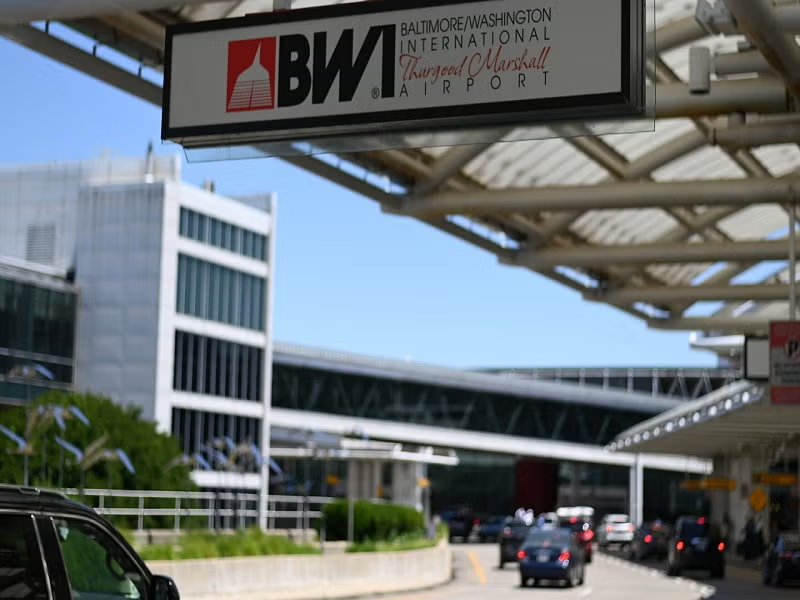
BWI Thurgood Marshall Airport required a comprehensive renovation of the Aircraft Rescue and Fire Fighting (ARFF) station kitchen, replacing aging finishes and equipment while upgrading the supporting plumbing, mechanical, and electrical infrastructure. The construction documents show the work was organized as a 225-calendar-day phased renovation completed in three consecutive stages: Phase 1 for temporary barriers, temporary plumbing utilities and fixtures, and a new outdoor canopy; Phase 2 for kitchen and equipment demolition and new work; and Phase 3 for epoxy floor installation.
The project also required temporary operational accommodation during active construction. The drawings identify a temporary relocated trade sink during Phase 2, supported by temporary hot water, cold water, and sanitary connections until permanent work was completed.
Solution
PBI delivered a full kitchen modernization centered on durability, functionality, and code-compliant infrastructure upgrades. The scope included demolition and replacement of kitchen equipment and systems, followed by installation of new food-service fixtures, utility connections, and support systems. New work included a gas range, dishwasher, oven, dual coffee maker, bottle filling station, garbage disposals, and associated plumbing and electrical connections.
Mechanical and life-safety upgrades were a significant part of the project. The drawings and specifications confirm a new hood exhaust tied into the existing grease duct, hood make-up air plenum connections to existing ductwork, a new wet-chemical fire protection system for the kitchen hood, replacement of rooftop exhaust and make-up air units, a new emergency gas shut-off solenoid valve, and a manual emergency override switch serving the cook line.
The project also extended beyond the kitchen interior. The documents identify a manufactured metal canopy, fire suppression coverage under the canopy using dry sidewall heads tied to the existing system, new canopy lighting, and relocation of an existing public-address speaker.
Execution
The renovation was carefully phased to support continuity of operations while work progressed. Construction drawings show a defined haul route, contractor parking, lay-down area, and secure-access entry points, with restrictions on use of the main public building entry except for oversized items.
The specifications and drawings also show that the project was managed within an existing facility environment requiring temporary barriers, utility coordination, selective demolition, dust and debris control, protection of adjacent areas, and phased sequencing of major trades. The contract further required construction debris management targeting 75 percent salvage/recycling by weight of total debris generated, along with 100 percent salvage or recycling of uncontaminated packaging materials.
Result
Completed on December 3, 2025, the renovation delivered a significantly upgraded kitchen environment for the ARFF station, combining new commercial kitchen equipment, improved plumbing, mechanical, and electrical infrastructure, upgraded fire protection, and exterior enhancements under a disciplined phased construction strategy. Based on the construction documents, this was not a cosmetic refresh but a fully coordinated modernization of a critical support space within an emergency-response facility.